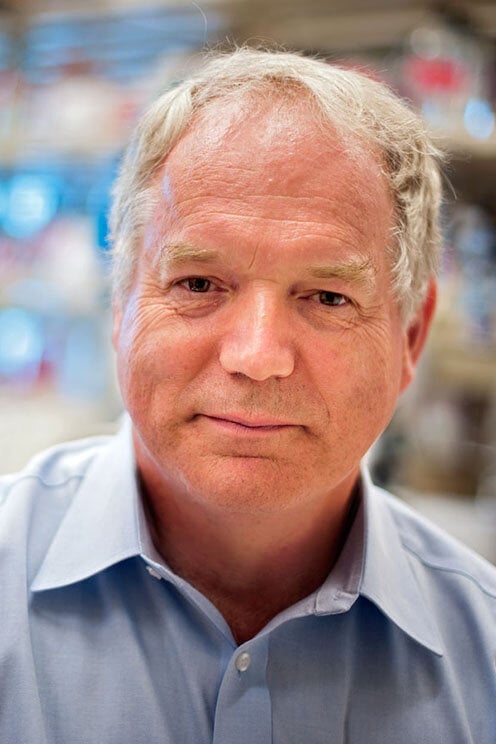
I got ANOTHER reply from a Nobel Laureate! This time it was Michael Houghton.
Dr. Houghton’s discovery of the Hepatitis C virus in 1989 transformed medicine, allowing for the creation of diagnostic tests and antiviral treatments that have saved millions of lives worldwide. His work didn’t just uncover a pathogen — it reshaped how the world understands infectious diseases, persistence in research, and the human cost of scientific breakthroughs.
In this interview, Dr. Houghton reflects on the decades-long journey behind his discovery, the patience and resilience required to find a virus no one had ever seen, and his thoughts on the future of research in an era shaped by bioinformatics and AI.
- What first got you interested in virology? Was there a moment that made you realize this was what you wanted to do?
- At age 17, I thought hard about what vocation to pursue. After reading about Louis Pasteur’s career and life ( his daughter died from bacterial infection ), I became highly motivated for a medical research career. I was also fascinated by Physics but thought that I would be likely to be more successful in medical research which is what I chose. Choosing a career path is finding your passion but also asking yourself, am I likely to be successful ?
- When progress was slow during the Hepatitis C research years, how did you keep yourself motivated to keep going?
- It never really worried me despite being pressured by the start-up Biotech that I was employed in California. I just asked myself, what better goal could I be working on in the medical area and always believed that somehow, we would succeed ( based on my previous experience in gaining my PhD and then performing a post-doctoral position for 5 years )
- There are so many different upcoming fields like AI and bioinformatics – How do you think they will impact research and scientific discovery?
- Tremendously so but scientists still need to have experience in laboratory methods. One day, AI could tell you what drug would work against which target but you will still need a wet-lab and experience to test it
- What part of the Hepatitis C discovery do you think people don’t usually understand or talk about enough?
- Although I was the project leader and ultimately responsible for the success or failure of the project, I worked with very talented colleagues. It was very disappointing to me to find out that award committees do not always accept my recommendations on who to share the awards with.
- How did you manage to stay curious while also dealing with the pressure for clinical results?
- I knew that if we succeeded in discovering HCV, it would have a big impact on people’s health. That was what kept me going. What better work could I be doing ?
- Are there any new research areas or technologies today that excite you the same way Hepatitis C did back then?
- With rapidly expanding technologies, I believe that most serious diseases will be treatable within the next 50 years, so a very good time to be entering medical research now for young people !!
- After winning the Nobel Prize, did your relationship with science change at all — maybe in how you see your own work or its impact?
- No, we now have blood & diagnostic tests for HCV and curative antivirals but we still need a vaccine which we are working on very hard
- You’ve worked in both academia and industry — what’s one thing you learned from each that you think every scientist should know
- Scientists in industry are under-appreciated. For example, Genentech Inc pioneered cancer antibodies, Cetus Inc invented PCR, Biogen discovered how to make interferons in bacteria, how mRNA is translated inside the cell came from industry, RNA vaccines came from Moderna Inc and BioNtech Inc.
- If you could give one piece of advice to students who dream of making a real impact in science, what would it be?
- Figure out your passion in life and if you have a chance of succeeding and then go for it 100%
- You’ve worked on global health challenges — what do you think the world still misunderstands about viruses and pandemics?
- That there always have been and always will be new pandemics emerging
- What role do you think emotions and intuition play in the scientific method and discovery process?
- Experience counts a lot more and working with other good scientists, and then enjoy the journey. If you fail, you can always drive Uber !
- What was the driving force behind your research, and is there another field that you’ve always been curious to explore?
- I trained as a molecular biologist. Labs all around the world had tried to use traditional virology for 15 years to discover HCV without any success. My colleagues and I found this virus using an unconventional molecular biology approach, but it took 7 years ! Currently, I am working on a HCV vaccine and several anti-cancer drugs as well as developing RNA technology for future vaccines and therapeutics.

 The Curious Gene Blog
Leave a comment