Ever wondered what goes on in the mind of a Nobel Prize-winning scientist? I reached out to a pioneer in CRISPR-Cas9 research, and to my surprise, she replied! Emmanuelle Charpentier, the French microbiologist and geneticist behind this groundbreaking gene-editing tool, won the 2020 Nobel Prize in Chemistry alongside Jennifer Doudna. Their discovery transformed genetic research and medicine. From the thrill of discovery to ethical debates, here’s what Charpentier had to say about shaping the future of gene editing.
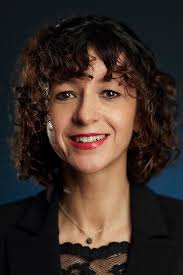
1. What first sparked your interest in this field, and did you always envision yourself making such a revolutionary discovery?
From an early age, I was deeply fascinated by the natural world, as my father was a gardener and used to explain to me the Latin names and characteristics of all plants. My mother was a nurse, which sparked my interest in health and medicine. I was drawn to microbiology because of the complexity of micro-organisms and the multitude of their unique mechanisms. My curiosity grew when I realized that understanding bacteria could unlock enormous potential in many fields, including medicine and biotechnology. As for the idea of a revolutionary discovery, I didn’t set out to create a revolution, but I was always inspired by the idea of creating a difference and finding a niche in research that could pave the way for a new field of research. What I wanted was to answer fundamental questions in microbial genetics and, in doing so, we stumbled across something truly transformative with CRISPR-Cas9. It was about being in the right place at the right time and being open to exploring unconventional ideas.
2. Could you take us back to the moment when you realised CRISPR’s true potential?
It was while working with my team on a small RNA that exists in bacteria and works with the CRISPR-Cas9 system to enable bacteria to defend themselves against mobile genetic elements that I became aware of CRISPR’s true potential, and even more so at each stage of the discovery of the mechanism involved. When we discovered that the CRISPR-Cas9 system could be programmed to cut DNA in specific places, I immediately saw the vast possibilities for a powerful genetic tool. It wasn’t just a discovery, it was the key to revolutionizing genetics. My first reaction was excitement, mingled with admiration for the simplicity of the system. I knew we had opened the door to a new era in gene editing.
3. Were there moments of doubt or major obstacles in developing CRISPR as a gene-editing tool?
Absolutely. No innovative and groundbreaking scientific endeavor is free of obstacles. At many points, we were confronted with skepticism, both within and outside the scientific community. One challenge was to define and understand all the components of the system. Another was to guarantee the precision of CRISPR-Cas9 by targeting specific DNA sequences without unintended consequences. But the key to overcoming these challenges was collaboration, determination and staying focused on the technology’s potential.
4. What are your thoughts on the ethical concerns surrounding CRISPR, particularly in human genome editing? Where should we draw the line?
Ethical concerns are very important, especially when it comes to human germline editing. While CRISPR opens up incredible prospects for the treatment of genetic diseases and even the potential prevention of hereditary diseases, it also raises important ethical questions. We need to ensure that we use these tools responsibly, carefully weighing up the risks and benefits. The line should be drawn where the potential for harm outweighs the benefits, and where scientific understanding is sufficient to avoid unintended consequences.
5. What advice would you give to young female researchers who aspire to make breakthroughs in STEM?
My advice to young female researchers is simple: follow your passion and curiosity. The field of science can be challenging, especially in male-dominated sectors, but it’s also rich in opportunity and innovation. Don’t be afraid to take risks and challenge established ideas. Find mentors who encourage you, and try to build a network of supportive collaborators and peers. Perseverance is the key: there will always be setbacks, but it’s resilience that will see you through.
6. How do you see CRISPR evolving in the next decade? Do you think it will become a mainstream medical treatment for genetic diseases?
I believe that over the next decade, the CRISPR technology will continue to evolve and its applications will become more refined and more accessible. It is already being used to treat sickle cell disease, beta-thalassemia and certain blood cancers. We are seeing early successes in clinical trials for other diseases, and I expect these to expand, providing treatments for a wider range of conditions. However, we need to be careful and rigorous in our approach to ensure that these treatments are safe and effective. It is possible that gene-editing therapies will become an integral part of personalized medicine, particularly in areas such as cancer treatment, genetic disorders and even potentially aging. The challenge is to scale up while minimizing risks, provide effective delivery methods and make these therapies affordable.
7. What do you personally consider your most rewarding achievement in your career so far?
While winning the Nobel Prize is an incredible honor, the most gratifying achievement of my career is knowing that the work we’ve done with CRISPR has had such a profound impact on science and medicine. The ability to see how our research has opened up new avenues for understanding genetics, treating disease and improving agricultural practices is deeply gratifying. But beyond the accolades, knowing that I’ve contributed to something that will improve the lives of countless people is what makes all the hard work worthwhile.
8. If you could have a conversation with any historical scientist, who would it be and why?
If I could talk to one historical scientist, I would choose Marie Curie. She was not only an incredibly brilliant scientist, but also a pioneering woman in a field dominated by men. Her work on radioactivity changed the course of science and medicine, and I admire her dedication, perseverance and resilience. I would love to discuss her experience of the challenges of being a woman in science, how she overcame adversity and what she thought about the role of science in improving society. Her legacy continues to inspire many people, including myself.
Sources:
NobelPrize.org. (2020). The Nobel Prize in Chemistry 2020. [online] Available at: https://www.nobelprize.org/prizes/chemistry/2020/charpentier/facts/.
Rogers, K. (2022). Emmanuelle Charpentier | Biography, Facts, & Nobel Prize. [online] Encyclopedia Britannica. Available at: https://www.britannica.com/biography/Emmanuelle-Charpentier.
http://www.mpg.de. (n.d.). Prof. Emmanuelle Charpentier, Ph.D. [online] Available at: https://www.mpg.de/9343753/science-of-pathogens-charpentier.


 The Curious Gene Blog
Leave a comment